:format(webp))
Unifying Perk's Digital Presence
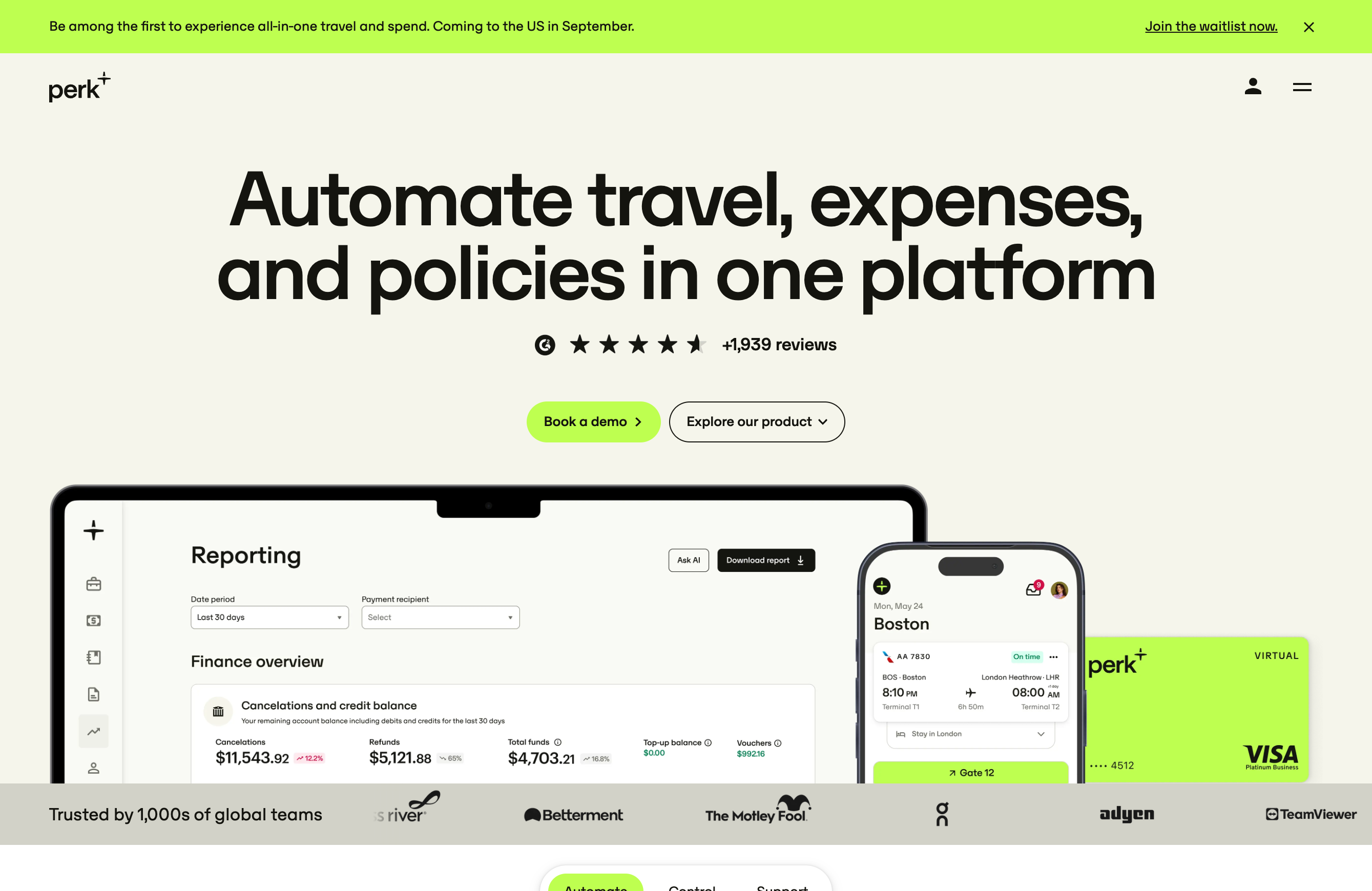
Perk is an AI-native travel and spend platform. Booking, approvals, and expenses in one system, with the manual work stripped out.
As Perk expanded its platform, the web presence fragmented: multiple brands, separate domains, overlapping narratives, parallel content systems. None of it reflected how the unified product actually worked.
Perk hired Makers' Den to consolidate everything into a single perk.com that matches the scale of the platform, on a frontend that can keep evolving with the product.
:format(webp))
Nick Roberts
Director Growth Marketing
:format(webp))
“We're very confident in Makers' Den's technical work and expertise.”
Read on Clutch
The Challenge
This wasn't a redesign. It was a structural reset, executed live.
Perk was rebranding (TravelPerk to Perk) while folding new product lines into the platform. Each came with its own surface, content stack, and SEO history. The debt was real:
Hundreds of Yokoy blog posts on WordPress with established search equity
Amtrav and ClickTravel sub-brand surfaces that needed to keep operating during cutover
9 locales with localized content, PDFs, currency, and CTAs
Legacy URL structures that couldn't break without tanking rankings
A live travelperk.com generating leads that stayed live throughout the migration
Tracking infrastructure spread across tools, ready to be unified
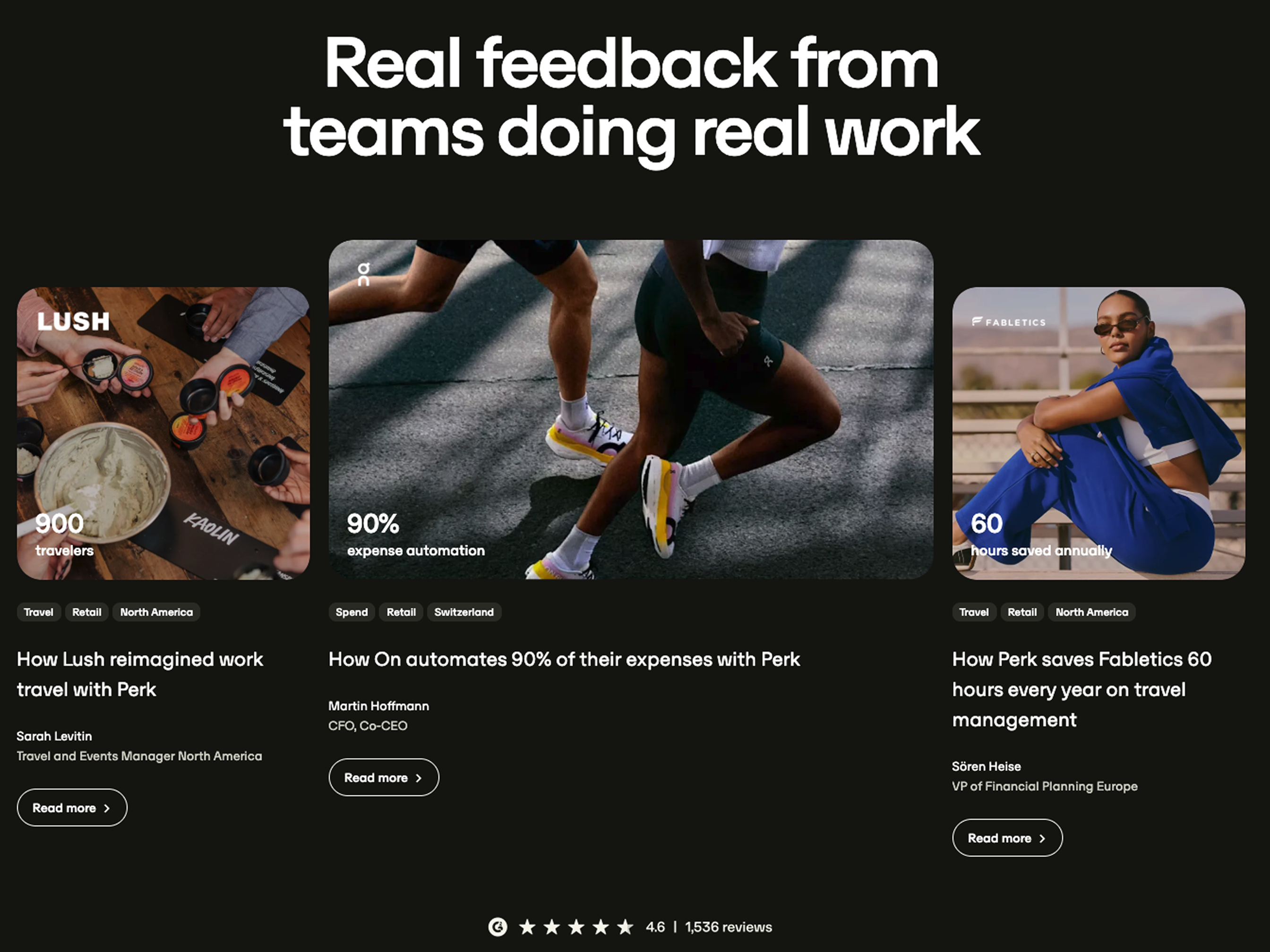
On top of that, the new site had to clearly explain a complex B2B platform (travel booking, spend, approvals, expense automation) to decision-makers running long sales cycles, and perform as the primary acquisition channel.
The Approach
Lean team, execution-focused. Makers' Den came in as technical implementors. Perk owned brand and content direction. Three early bets shaped the project:
1. Feature-flagged cutover. The entire new brand shipped behind an environment flag (NEXT_PUBLIC_NEW_BRAND_ENABLED). New nav, footer, splash screen, sub-brand variants for Amtrav and ClickTravel, all pre-built and pre-validated in production before flip day. Reversible, low-drama launch.
2. Incremental migration, not big-bang. Yokoy content and acquired-brand surfaces moved in waves. Each wave validated in production before the next started. Marketing kept shipping throughout.
3. One source of truth. Every blog post, every metadata field, every redirect ended up in a single Storyblok space modeled around the new brand, not the old ones. No legacy systems left running in parallel.
Technical Implementation
The interesting work was in the migration and the tracking rebuild, not the greenfield UI.
Stack
Framework: Next.js. Fast, SEO-friendly, well-suited to a content-heavy marketing surface.
CMS: Storyblok. Component-based authoring marketing actually uses without a developer in the loop.
Tracking: Segment + GTM, unified into one event architecture.
Brand cutover
New Perk navigation, footer, animated multilingual splash screen
Sub-brand nav variants for Amtrav and ClickTravel
Country/language selector with synchronized currency switching (incl. CAD)
URL utils refactor, hardcoded travelperk.com links purged from nav, footer, and Storyblok content
Env-driven cookie domain, base URL, robots.txt updates
All shipped behind a feature flag, flipped on cutover day with a clean rollback path
Yokoy WordPress migration
Hundreds of posts pulled from Yokoy's WordPress install
Custom mappers translating WordPress fields and metadata into the Storyblok content model
Authors, categories, and tags reconciled across acquired brands so duplicates collapsed cleanly
Inline images rehosted, body content rewritten to use new components
Redirects (the part that protects the SEO)
Full URL inventory across legacy domains, travelperk.com, and Yokoy product lines
301 map covering blog slugs, product pages, and acquired-brand URLs
Edge-level redirect handling, no slow CMS lookups in the path
Verified against Search Console pre-launch, monitored for weeks after cutover
Localization
9 locales rolled out across nav, footer, menu, CTAs, and content
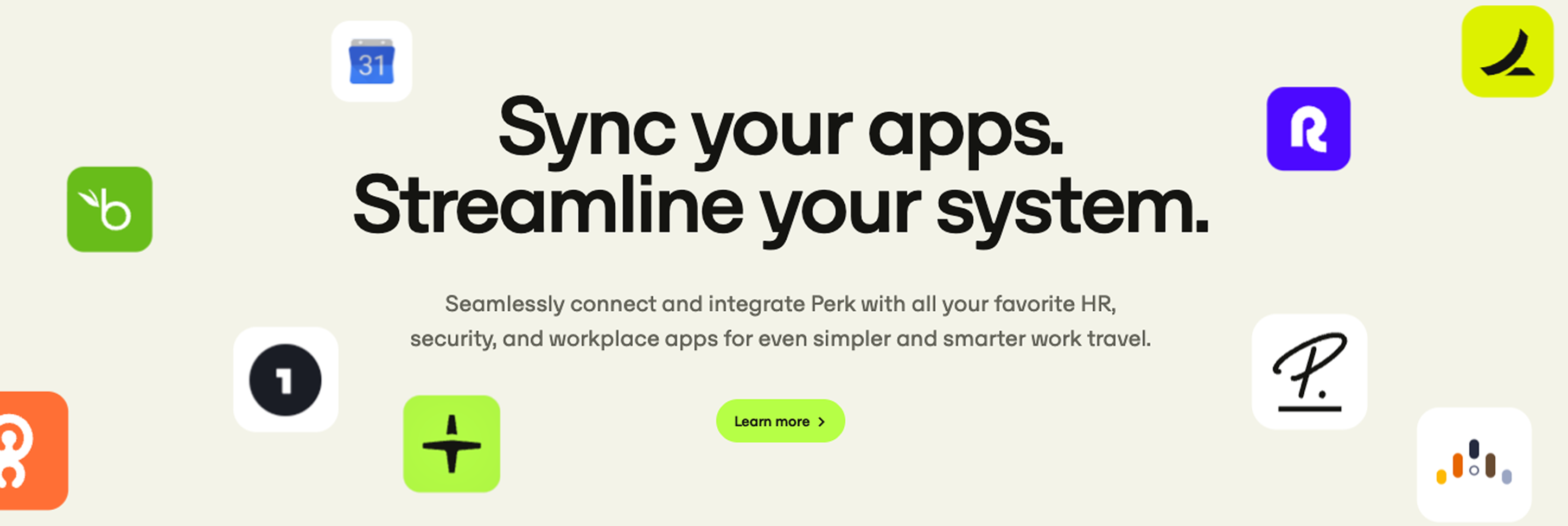
Localized landing pages and PDF downloads (Shadow Work Report shipped in EN/ES/FR/IT/DE)
Region-aware banners and pricing (NAM nav config, CAD currency)
Analytics overhaul
The rebrand was the moment to consolidate tracking onto one architecture, with consent-gated loading from day one.
Unified Segment + GTM event suite (link_clicked, form_started/filled/completed/errored, page_scrolled, page_exit, page_variation_viewed)
Standardized event params across the site (button_region, message_id, page name/ID, locale, anonymous ID)
SHA256 email hashing for GTM, Salesforce-driven lead_id_hash for downstream attribution
Marketo form integration hardened for reliability
PrivacyPreferenceProvider gates Segment behind consent readiness, so nothing fires before the user has chosen
SEO and schema
Breadcrumbs JSON-LD, OG image meta, alt-text fallbacks, Storyblok-driven image dimensions
Core Web Vitals in the green across templates
The Outcome
One perk.com. One frontend. One content repository. One tracking architecture. Yokoy blog history preserved, redirects in place, sub-brands operating cleanly, 9 locales live, editorial workflow handed back to marketing.
The rebrand cutover happened behind a feature flag and shipped without a search traffic cliff, which is the only real test of a domain consolidation like this. Any potential future acquisitions plug into the same content model and the same event suite instead of becoming another island.
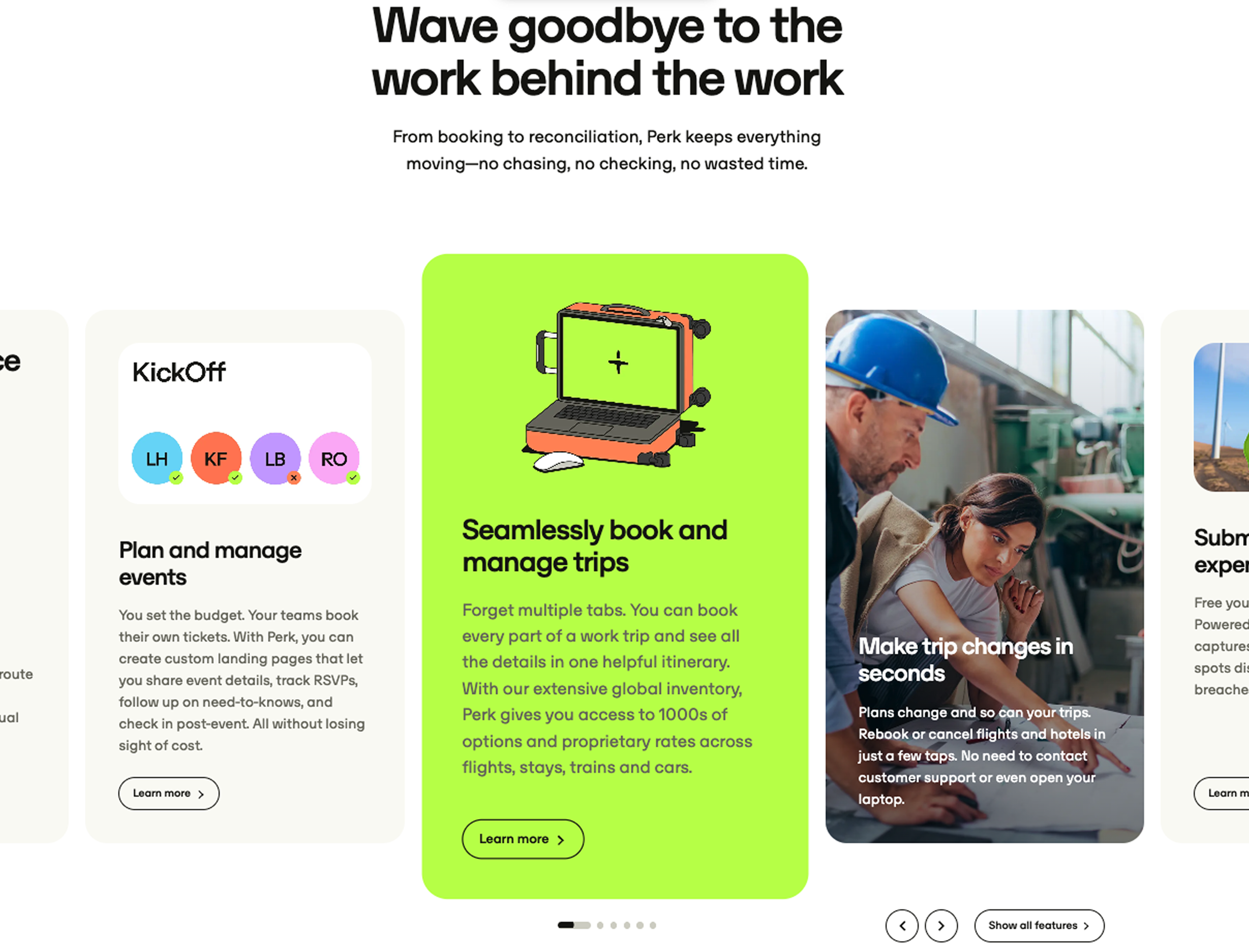
The site now scales with the business: a high-quality asset that supports growth instead of slowing it down.

Read the follow-up case study: A Performance-First Rebuild: perk.com on Astro.
Related services
This work is closely related to our fast websites and headless CMS and growth engineering services.
:format(webp))
:format(webp))
:format(webp))