:format(webp))
:format(webp))
N8N vs. Convex: Choosing Your Engine for AI Agent Workflows
The rise of AI agents is transforming how you can approach complex tasks. These agents are no longer just simple chatbots; they are sophisticated systems capable of multi-step reasoning, tool usage, and autonomous decision-making. As you look to build these intelligent systems, you face a critical choice: what platform will serve as the foundation? This article breaks down two leading contenders, N8N and Convex, to help you decide which engine is right for your AI agent workflows. You will gain a clear understanding of their core philosophies, architectural differences, and how they can even work together to create powerful, production-ready solutions.
The Dawn of AI Agents: Beyond Simple Automation
We are witnessing a significant shift in automation. For years, automation meant rigid, rule-based systems that followed a predefined script. If a process deviated even slightly, the system would break. AI agents represent the next stage of this evolution, moving from static rules to adaptive, intelligent workflows. These agents can understand natural language, reason through problems, and make decisions to complete complex, multi-step tasks that were previously the domain of human workers.
This advancement, however, introduces new challenges. Building robust AI agents requires more than just a connection to a Large Language Model (LLM). You must consider how to manage their memory, provide them with tools, handle errors gracefully, and scale their operations. A traditional automation system, for example, might be able to process an invoice based on a fixed template. But it would fail when faced with a customer support query that requires understanding sentiment, looking up past order history, and then deciding whether to issue a refund or offer a discount. This is where a well-architected AI agent excels, and choosing the right platform to build it on is a foundational decision.
Feature | N8N | Convex |
|---|---|---|
Core Philosophy | Visual Orchestration | Reactive Backend/Code-first |
Role in AI Workflow | External Orchestrator | Internal Engine for Stateful Logic |
Primary Use Case | Embedding AI into business processes | Building core AI agent applications |
Coding Preference | Low-code/No-code visual builder | Code-first TypeScript |
Scalability & Reliability Focus | Workflow stability, retries, audit logs | Durable execution, real-time reactivity |
N8N: The Orchestrator's Canvas for AI
N8N has established itself as a visual, low-code automation platform, and it is now extending those capabilities to function as a powerful AI orchestrator. Its core strength lies not in being the "brain" of the agent itself, but in controlling the entire workflow around the agent. Think of it as the conductor of an orchestra; it directs the sequence of events, manages conditional branching, pre-processes data before it reaches the agent, and handles the agent's output.
This approach is particularly effective for integrating AI into larger, existing business processes. With a vast library of over 500+ integrations, it can orchestrate complex sequences. For example, imagine a new customer inquiry arrives via a webhook. N8N first extracts relevant details like the customer's name and query subject. It then passes the full query text to an AI agent for sentiment analysis and issue categorization. Based on the agent's output, N8N can then conditionally route the inquiry to the appropriate support team in Salesforce, or if the sentiment is negative, escalate it to a manager and send a personalized holding email. The platform's visual, node-based canvas makes it possible to insert human-in-the-loop approval steps, ensuring critical decisions are not fully autonomous. N8N's design emphasizes stability and control.
"N8N's strengths in reliability, retries, deterministic branching, and audit logs." - Modexa on Medium
This means you can wrap an AI agent's non-deterministic, creative output within a framework of reliable, predictable logic, ensuring that if one part of the process fails, it can be retried or rerouted without disrupting the entire system.
Convex: The Reactive Backend for Stateful AI Agents
Convex takes a fundamentally different, code-first approach. It is a full-stack, real-time reactive backend designed for modern applications, and it provides a structured framework specifically for building "agentic AI applications" using TypeScript. Instead of orchestrating around the agent, Convex provides the internal architecture for the agent, managing its persistent state, message history, and real-time communication.
The platform's architecture is built around components that handle the core mechanics of an AI agent. This includes features like:
Persistent Threads: Convex automatically manages conversation history, so the agent always has access to its long-term memory.
Automatic Context: It intelligently includes relevant past messages and context in prompts to the LLM.
Vector Search: It has built-in hybrid vector and text search, enabling sophisticated Retrieval-Augmented Generation (RAG) techniques.
A key advantage of Convex is its ability to separate long-running agent workflows from the user interface while maintaining full reactivity. For example, you could build a collaborative AI assistant where multiple users interact with the same agent. As the agent works on a complex task in the background, the UI updates in real time to show its progress, thought process, or requests for more information, all powered by Convex's reactive data layer.
Architectural Philosophies: Orchestration vs. Stateful Logic
The core difference between N8N and Convex lies in their architectural philosophies. N8N is an external workflow orchestrator that treats AI agents as a powerful step within a broader business process. Convex is a backend that provides the internal, stateful logic for the agent to live and operate within.
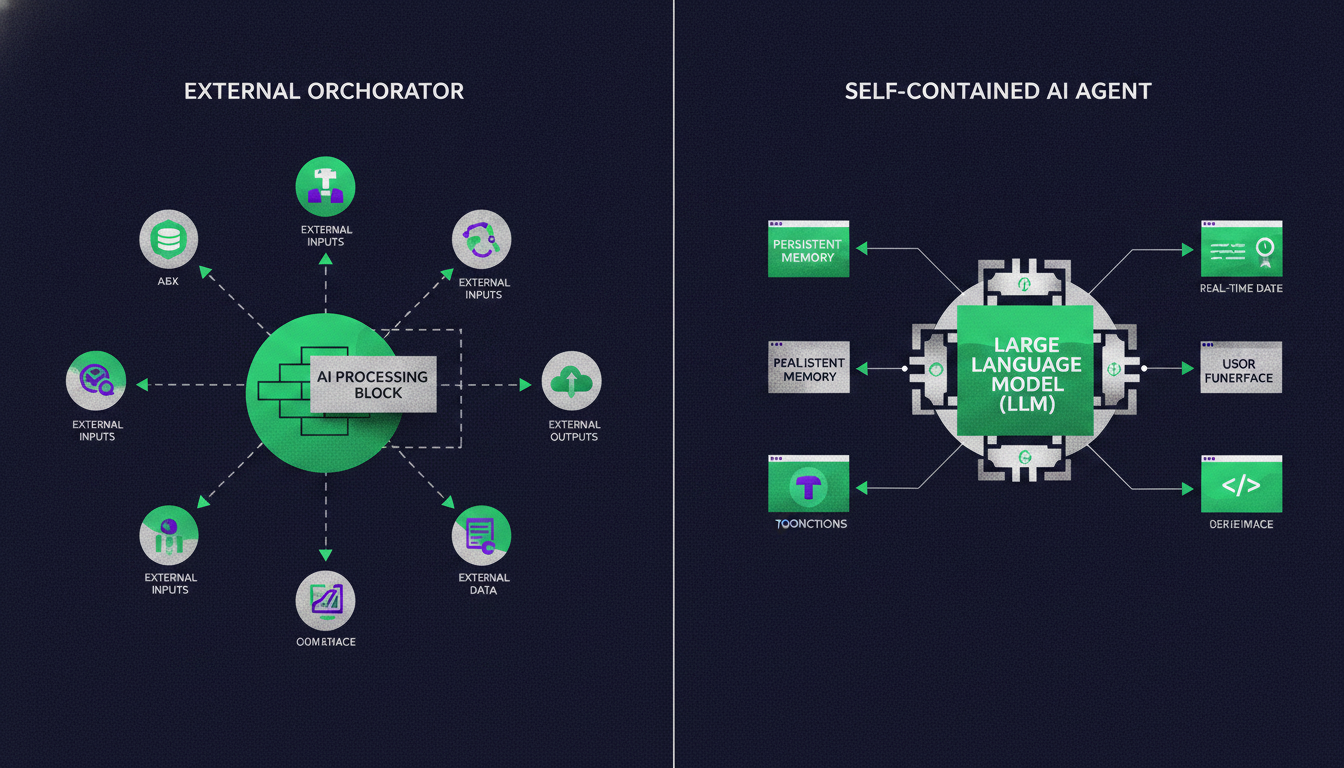
N8N excels at externalizing the agent's logic. You can build a workflow that syncs data between two applications, and at a specific point, calls an AI agent to summarize that data. The agent performs its task, returns the result, and the deterministic, N8N-controlled workflow continues. This is ideal for embedding intelligence into structured, repeatable processes.
Convex, on the other hand, is built for managing the agent's intrinsic workings. It provides the durable system where the agent's memory, tools, and execution flow are managed as code. This is better suited for building applications where the agent is the core product, such as a continuous personal assistant or a sophisticated research tool that requires long-term state and real-time interaction. This distinction highlights that the two platforms can be seen as highly complementary. As one analysis puts it, "N8N and AI agents are complementary, not competitors." You might use N8N to handle a scheduled daily report that triggers an AI agent, while you would use Convex to build the continuously running AI assistant that agent communicates with.
Crafting Intelligent Agents: Context, Tools & Human Touch
An effective AI agent relies on three pillars: context (memory), tools (the ability to act), and often, a mechanism for human oversight. Both N8N and Convex provide robust solutions for these, albeit through different means.
N8N offers great flexibility. You can integrate with virtually any LLM or vector store, allowing you to choose the best models for your specific task. You can create custom tools for your agent using simple code nodes or by connecting to any of its hundreds of existing application nodes. For human-in-the-loop (HITL) scenarios, N8N's visual builder is a major advantage. You can easily insert an "Approval" node into a workflow, which pauses execution until a human reviews the agent's proposed action and either approves or denies it, ensuring a layer of control over critical decisions.
Convex provides these capabilities in a more integrated, code-native fashion. It has built-in persistent message threads and automatic context management, simplifying the development of agents with long-term memory. Tool calls are handled seamlessly as TypeScript functions within your agent's code, making integration with other services direct and maintainable. For HITL, Convex's reactive architecture shines. Instead of a hard pause, you can build a UI that exposes the agent's current "thought process" or plan in real-time, allowing a human observer to monitor its progress and intervene or provide guidance without halting the entire operation.
Capability | N8N Approach | Convex Approach |
|---|---|---|
Context (Memory) | Manages state and context through data passed between nodes in workflows; can integrate with external databases for persistent memory. | Leverages its persistent, real-time database for storing agent state, interaction history, and long-term memory. |
Tools (Action capability) | Extensive library of pre-built nodes to connect with thousands of applications and APIs, directly enabling a wide range of actions. | Provides a robust backend infrastructure (database, functions) to build and expose custom tools and integrate with external services. |
Human-in-the-Loop (HITL) | Workflow execution history provides visibility; supports manual triggers and approval steps; custom UI for intervention would be external to N8N's core. | Real-time database and reactive queries enable building responsive UIs to monitor agent "thought processes" and facilitate real-time human intervention/guidance. |
Production-Ready Agents: Reliability, Debugging & Deployment
Moving an AI agent from a prototype to a production system requires a focus on reliability, scalability, and observability. Both platforms are designed for production use but offer different tools to achieve it.
Aspect | N8N Approach | Convex Approach |
|---|---|---|
Reliability (Durable Execution) | Persistent workflow execution with retry mechanisms and queueing for long-running processes. | Transactional database with ACID guarantees, real-time updates, and robust function execution. |
Debugging & Observability | Detailed audit logs, visual workflow execution tracing, error handling blocks, and custom logging. | Server-side logs, real-time query introspection, built-in metrics, and dev-mode inspection tools. |
Deployment & Version Control | Self-hostable (Docker/Kubernetes) or cloud-hosted. Workflows and configurations version-controlled via Git (code-based workflows) or export/import. | Cloud-native deployment via CLI, tightly integrated with Git for schema and function code versioning, atomic deployments. |
Scalability | Achieved by horizontal scaling of worker instances, leveraging message queues and a robust database backend. | Managed cloud service with automatic scaling of compute and database resources, designed for high concurrency and real-time loads. |
N8N provides a suite of features geared towards operational stability. Its detailed audit logs give you a clear history of every workflow execution, making it easier to trace errors. The platform has robust retry mechanisms for failed steps and can be containerized for horizontal scaling. Debugging in N8N is a visual process; you can inspect the data at each node of your workflow to pinpoint exactly where a problem occurred. For deployment, N8N's workflow definitions can be exported as JSON files and integrated into CI/CD pipelines for version control. However, managing merges and resolving conflicts for visually designed workflows stored as JSON, particularly in a Git-based workflow, can sometimes require different strategies or be less intuitive than for code-first solutions like Convex, which use standard software development practices directly.
Convex, with its code-first nature, offers durability and real-time observability. Its architecture ensures that agent workflows are durable, meaning they can survive server restarts or temporary outages and resume where they left off. The Convex developer hub includes tools for debugging and real-time monitoring of your agent's execution paths and tool usage. Because all agent logic is written in TypeScript, it integrates naturally with standard development practices like Git for version control and automated CI/CD pipelines for deployment and rollback strategies, giving developers fine-grained control over the application lifecycle.
The Hybrid Advantage: Orchestrating Intelligence for Optimal Results
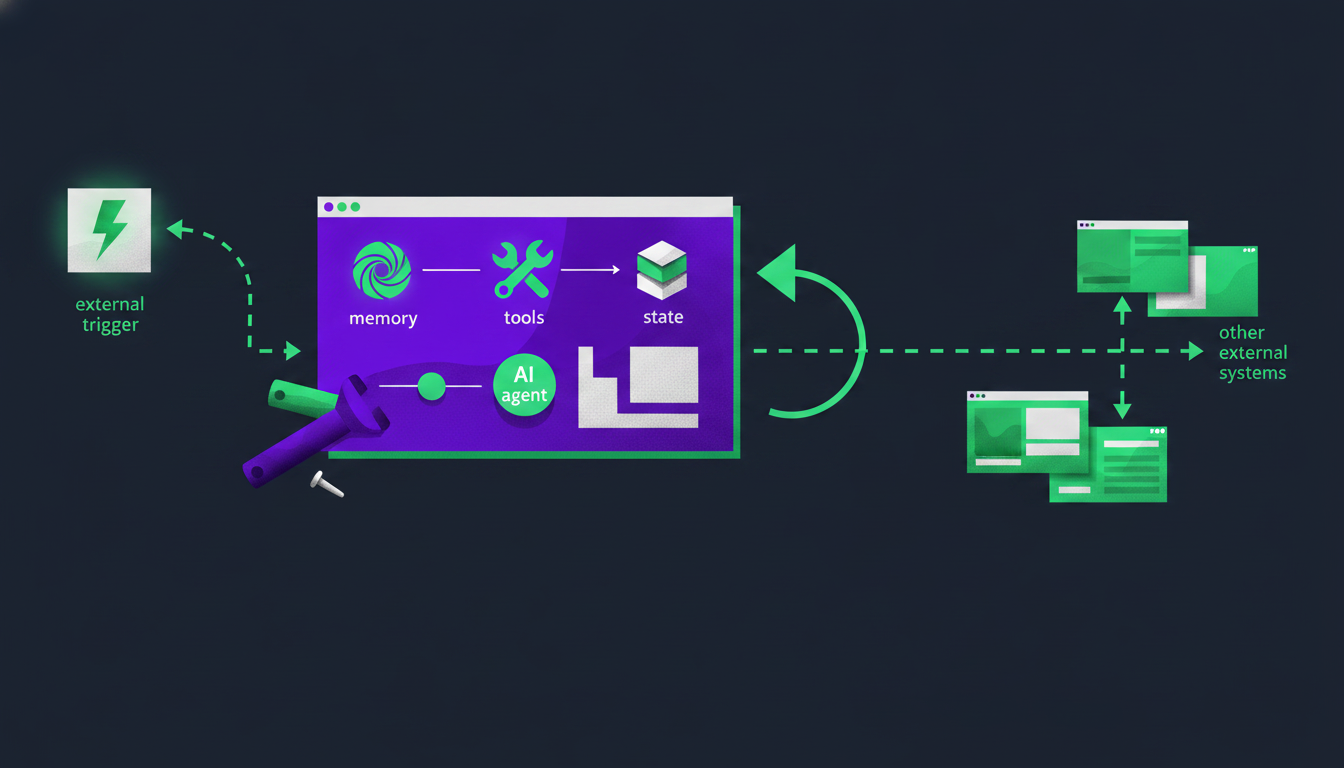
After comparing these two platforms, it becomes clear that the most powerful approach often involves using them together. N8N and Convex are not mutually exclusive; they are complements that can be combined to leverage the unique strengths of each. This hybrid model allows for "combining N8N for orchestration and AI agents for intelligence for best economics."
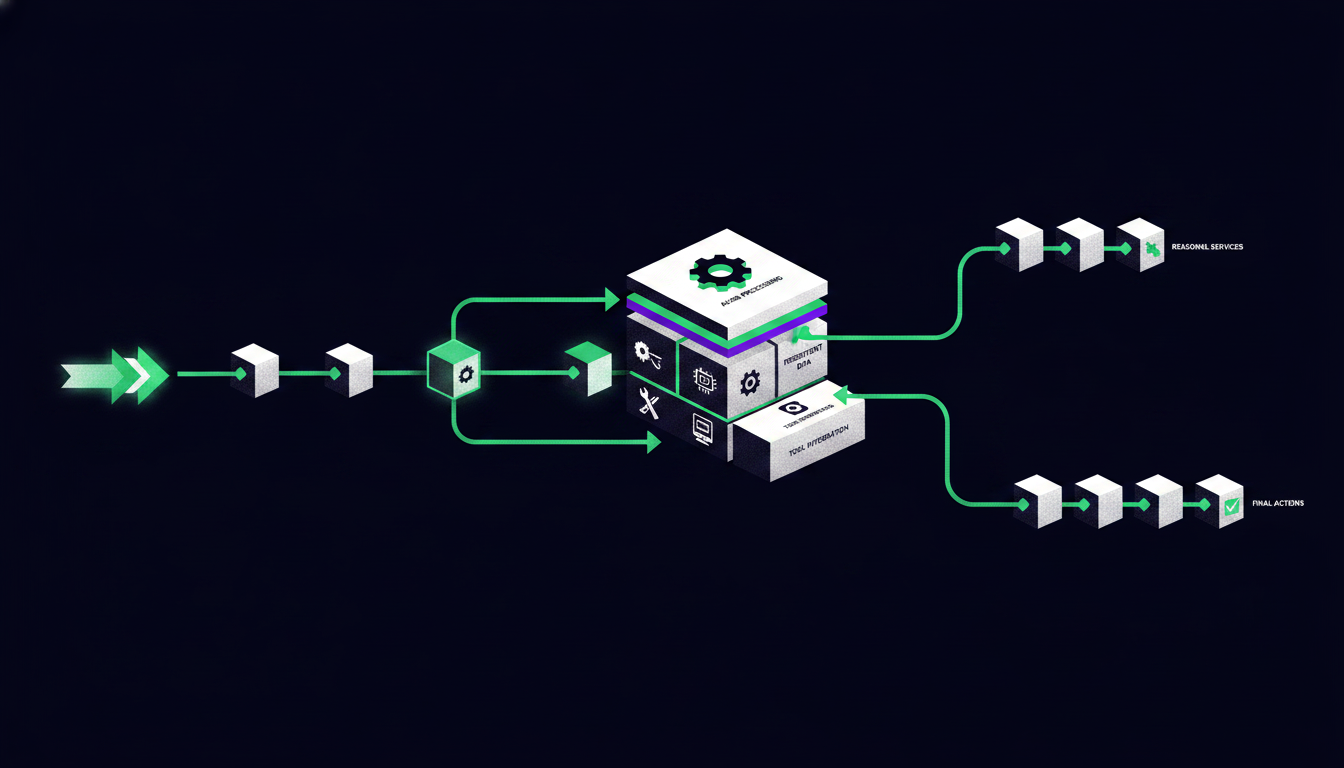
In this architecture, N8N acts as the high-level business process orchestrator. It handles external triggers (like a new email or a scheduled event), ingests and pre-processes data from various sources, and manages the deterministic steps of a workflow. When a task requires complex reasoning or natural language understanding, N8N delegates it to an AI agent built and hosted on Convex.
Convex serves as the core intelligence engine. It manages the agent's state, memory, and tool interactions within its reactive, code-first environment. Once the Convex-powered agent completes its task, it returns a structured output to the N8N workflow. N8N then takes this output and continues the process, perhaps by posting a message back to Slack, updating a record in Salesforce, or sending a final report. This strategy lets you use the best tool for each part of the job: N8N for broad, reliable integration and Convex for deep, stateful intelligence.
Charting Your Course in the Agentic Future
Choosing the right platform for your AI agent workflows depends on your project's specific requirements and your team's expertise. N8N stands out with its visual orchestration, vast library of integrations, and deterministic control, making it an excellent choice for embedding AI into existing business processes and for teams that prefer a low-code approach. Convex offers a powerful, code-first reactive backend, ideal for building complex, stateful AI agents that are the core of an application and for development teams comfortable with TypeScript.
Ultimately, the decision isn't just about N8N versus Convex, but about understanding the right architecture for your goals. You might start with N8N to quickly automate a process with an AI step, or you might build a sophisticated, real-time agent from the ground up with Convex. For the most demanding applications, a hybrid approach that leverages N8N's orchestration and Convex's stateful intelligence will provide the most robust and scalable solution.
Whether you prefer the visual control of an orchestrator or the granular power of a code-first backend, understanding N8N and Convex is key to building the next generation of intelligent automation. Which engine will power your next AI breakthrough?
:format(webp))
:format(webp))
:format(webp))