:format(webp))
:format(webp))
Clarify Your Project Vision and Requirements
Choose a ReactJS development agency by comparing the people who will do the work, the evidence behind their technical decisions and the conditions in their proposal. For a CTO, Head of Product or VP of Engineering, the useful question is whether this team can take responsibility for your next release and leave your product maintainable.
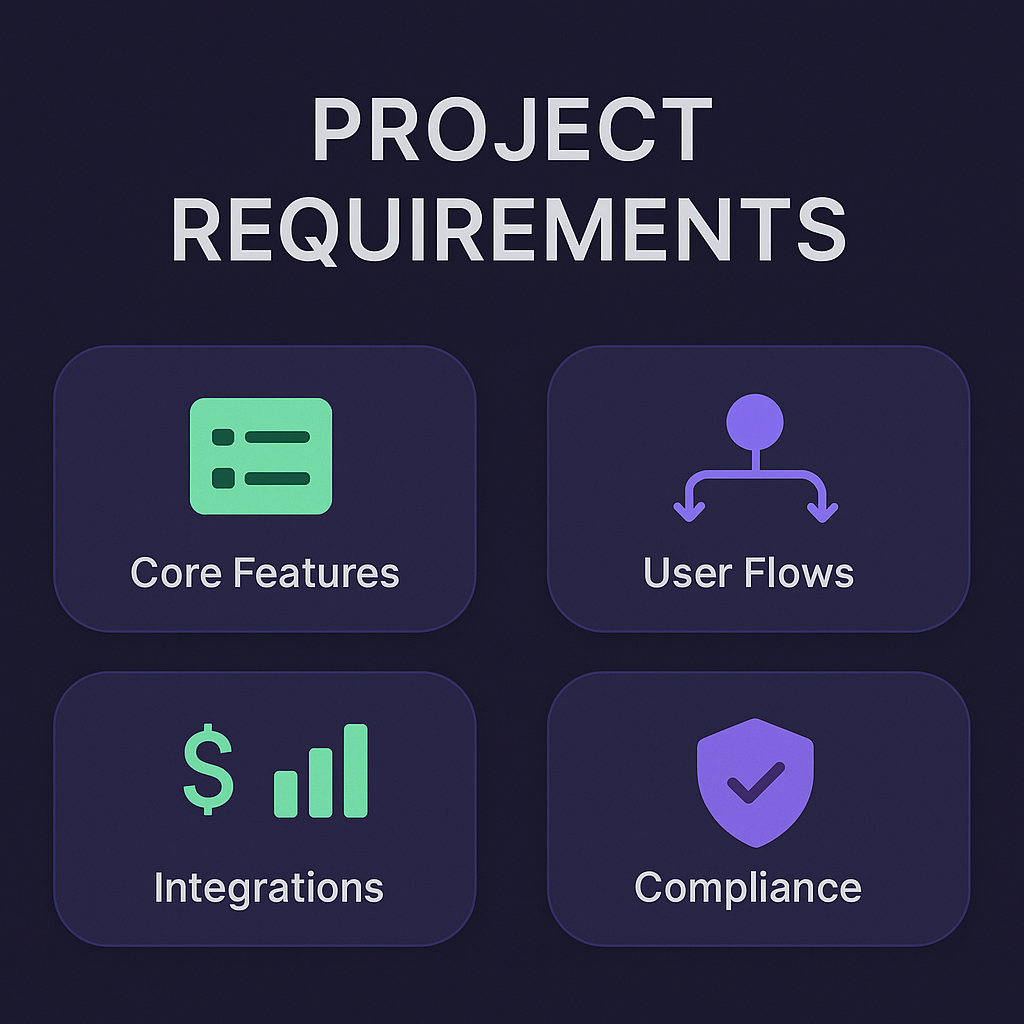
Send every shortlisted supplier the same brief. Include the user journey you want to improve, the current codebase and backend, the first release boundary, your internal team's availability and any fixed business date. Separate requirements from assumptions and explicitly list what can wait.
Define one measurable outcome, such as completing a key workflow reliably or reducing a known operational bottleneck.
Share integration owners, API access and known data constraints before asking for a delivery estimate.
Specify the browsers, devices, accessibility expectations and operational requirements that matter for the first release.
Explain who can approve scope changes and how quickly the agency can get product decisions.
If you are assessing Makers’ Den, our ReactJS development service describes the work we take on. Use the same evidence checks below for us and every other supplier.
Use a Supplier Scorecard
Score each category from 0 to 3: no evidence, a verbal explanation, a relevant example, or evidence you have checked with the proposed team or a reference. The weights below are an example; agree your priorities before reviewing proposals.
Criterion and example weight | Evidence to request |
|---|---|
Technical fit — 25% | A walkthrough of comparable work and the tradeoffs behind it |
Delivery and quality — 20% | A release plan, acceptance criteria and a testing example |
Named team and continuity — 20% | Who will build, their availability and replacement arrangements |
Commercial clarity — 15% | Scope, assumptions, exclusions and change process |
Ownership and handover — 10% | Repository access, documentation and an exit plan |
References and collaboration — 10% | A relevant reference and a working session with the delivery team |
Calculate each contribution as score ÷ 3 × weight. Keep unresolved requirements separate from the total: a high score elsewhere cannot compensate for a supplier being unavailable when you need them or unable to meet a required access arrangement.
Assess Expertise and Past Success
Technical Proficiency in React.js and Performance Optimization
Ask the proposed engineers to explain a real feature from API request through state, UI, loading and error handling. A useful discussion connects the implementation to a user need and names the alternatives they rejected.
State and data: how do they separate local UI state from server data, handle failed requests and avoid stale screens?
Rendering: when would they choose client rendering, server rendering or static output for your product?
Performance: what would they measure first, and how would they show that a change improved the slow interaction?
Maintainability: how do TypeScript, component boundaries and tests help another engineer change the feature safely?
Knowing a library name is weak evidence. So is prescribing memoization, micro frontends or a framework migration before investigating your application. If an existing codebase is a major uncertainty, a scoped React code audit can make the first delivery proposal more credible.
Open-Source and Community Engagement
Public code and technical writing can support an assessment, but they are optional evidence. Client confidentiality may prevent public examples. A permitted code walkthrough or a small paid discovery task can show how the proposed engineers reason without asking them to disclose another client's code.
Evaluate Processes and Collaboration
DevOps, CI/CD and Deployment Practices
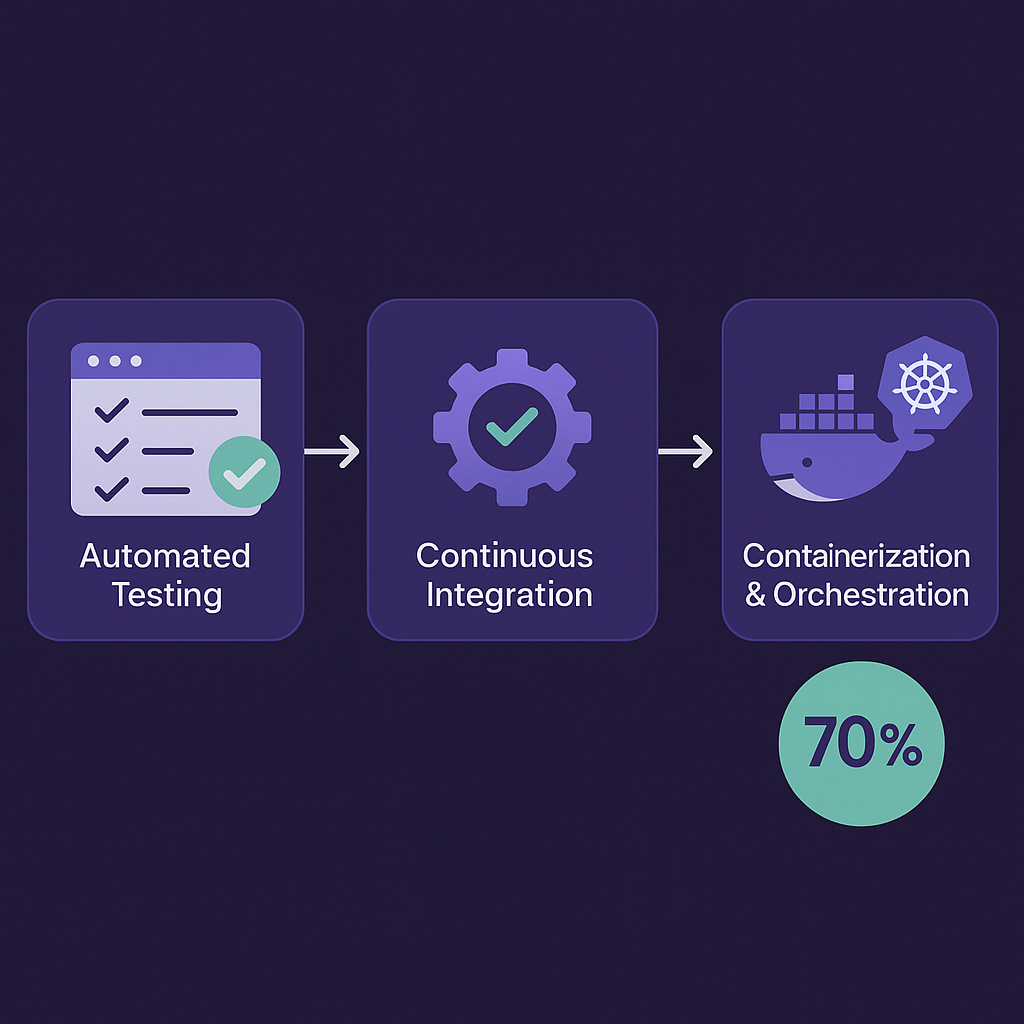
Ask the team to walk through a change from pull request to production. Look for review ownership, tests of important user journeys, environment management, release monitoring and a way to recover from a failed release. Ask who investigates an incident and how that responsibility changes after handover.
Request a sample progress update that shows working software, decisions needed, risks and remaining budget. Ceremony names alone tell you little about how quickly the team exposes a problem.
Accessibility and Acceptance Criteria
Agree which user journeys must work with a keyboard, assistive technology and supported devices. Ask for a demonstration of their review process, including manual checks. Make the agreed accessibility target and acceptance evidence part of the scope.
Design-to-Development Workflow
Ask how engineers and designers resolve loading, empty, error and permission states that may be absent from a design file. Check how the agency documents component behavior and gets decisions from your product team before rework accumulates.
Security Protocols and API Integration
Give the agency a concrete permissions scenario: two customer accounts, different roles and an integration that fails midway through an update. Ask how they would prevent cross-account access, test the rules and recover from failure. Name the owner of each backend, identity provider and integration; frontend expertise does not automatically cover those systems.
Consider SaaS-Specific Skills
Multi-Tenancy, Subscription Management and Scalability
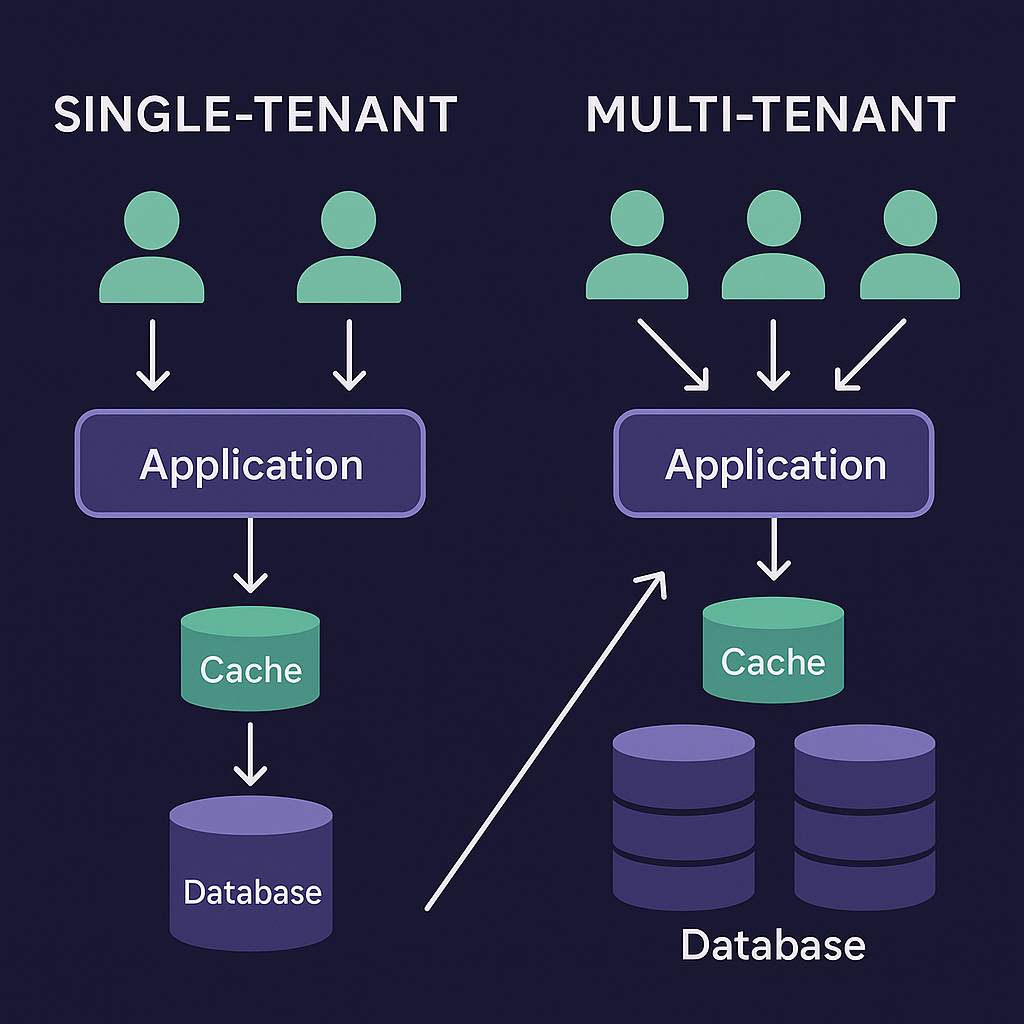
For SaaS work, discuss tenant isolation, role changes, subscription states and operational support. Ask what happens when a payment event arrives twice or a customer downgrades while a job is running. Capacity planning should start with your expected usage and bottlenecks, with a way to measure when the assumptions stop holding.
Internationalization and Localization
If you need multiple markets, include locale-specific content, number and date formatting, translation ownership and testing of longer text. Ask which parts are in the first release. A translation library alone is not a complete publishing workflow.
Confirm the Named Team and Continuity
Meet the engineers expected to join your project before selecting a supplier. Record their roles, allocation, start dates and time-zone overlap. Clarify whether the agency uses employees, contractors or subcontractors, and who is responsible for their work.
Who reviews architecture and code, and how much time do they actually have?
Who covers absence, urgent production issues and a departure?
How is a replacement approved, and who pays for the handover?
Will your team work directly with engineers, and where are decisions recorded?
Post-Launch Support, Knowledge Transfer and Pricing
Compare proposals against the same first milestone. Look for included engineering, design, testing, release work, meetings and support, then examine exclusions and dependencies. An inexpensive day rate can still produce an expensive release if essential work is missing.
Engagement model | What to clarify |
|---|---|
Time and materials | Team allocation, rates, budget checkpoints, forecast updates and approval before exceeding an agreed limit |
Fixed scope and price | Acceptance criteria, assumptions, exclusions and how discoveries or changes affect price and date |
Paid discovery followed by delivery | Concrete discovery outputs, how they support a delivery decision and your ability to use them with another team |
A fixed price does not make an uncertain scope certain. Use our software project estimation guide to compare work breakdowns and assumptions rather than headline totals.
Agree practical ownership early: access to source code, designs, infrastructure accounts, build pipelines and documentation; the handling of third-party dependencies; and what is handed over when the engagement ends. For support, clarify coverage hours, response expectations, responsibility and cost.
Check References and Test the Working Relationship
Ask for a reference from a project with similar delivery conditions, then ask what changed after the sales process. Did the named team do the work? How did they handle a missed assumption? Could the client's own engineers maintain the result? Would the client choose the same team again?
For a substantial engagement, consider a bounded paid first step: investigate one integration, deliver a thin end-to-end feature or assess a risky part of the codebase. Agree the output and decision it enables before starting. Avoid turning it into an open-ended discovery phase.
Your Roadmap to a Winning Partnership
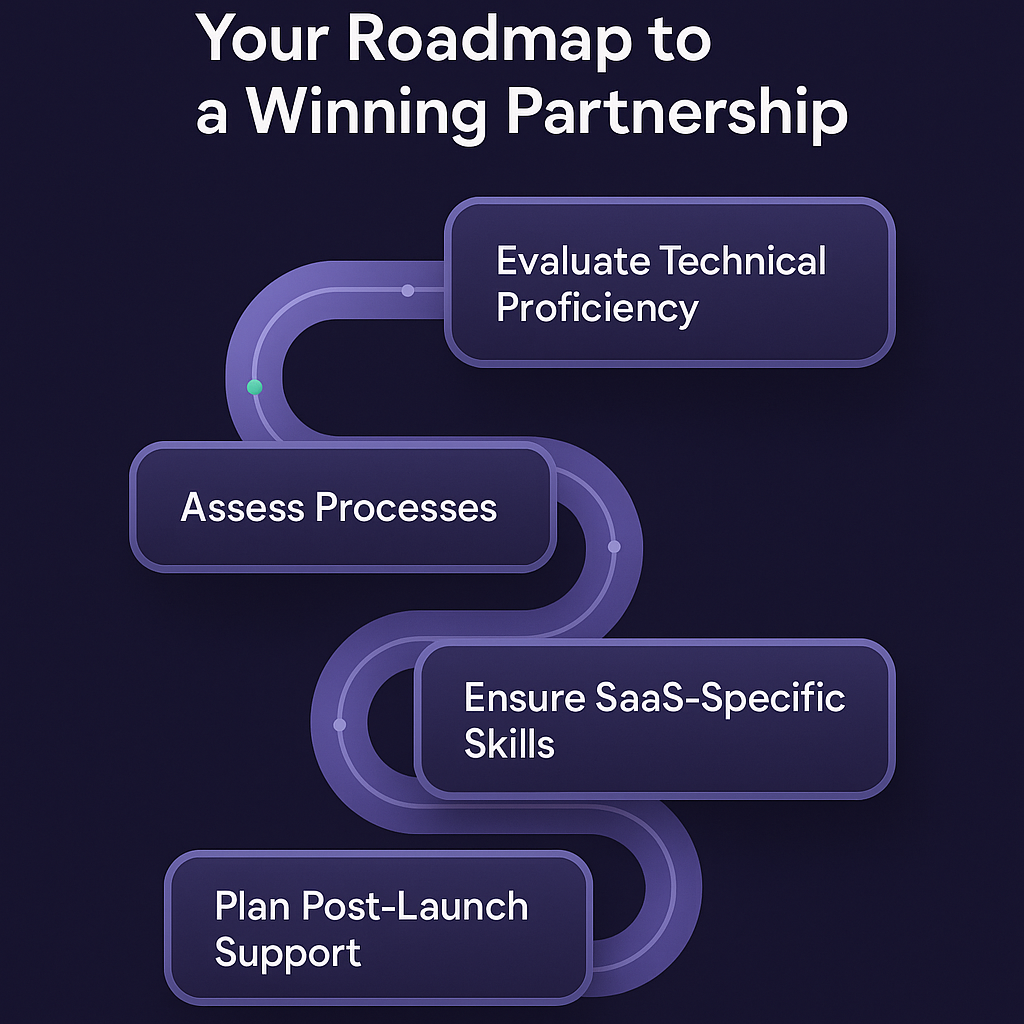
Shortlist on relevant experience, evaluate the proposed engineers, check references and compare a written first milestone. Resolve ownership and continuity before kickoff. Keep the evidence and unresolved questions beside the scorecard so the final decision is easy to explain.
Makers’ Den works with small senior teams on React development . If you need help taking a product from its first usable release into ongoing improvement, see our product engineering service .
Bring your first milestone and constraints to a conversation with a Maker to discuss the team and delivery approach your React project needs.
Discuss Your React Project
Bring your current product, first milestone and constraints. Talk with our Makers about the team and approach your project needs.
Talk to a Maker:format(webp))
:format(webp))
:format(webp))