Beyond the Chatbox: Constructing a Sovereign Intelligence with Custom AI Agents
A custom AI agent is an application configured to carry out a defined task using an AI model, instructions, approved business data and, where needed, connected tools. For example, an agent could check a support request against company documentation, propose a response and route an exception to a person. ‘Custom’ describes the workflow, data access and controls built for your organization; it does not necessarily mean training a new model.
You likely use public AI tools for quick drafts or basic research. However, these generic models often fail when they encounter the specific logic of your internal workflows or the nuances of your industry data. As the economic potential of generative AI continues to expand across global industries, understanding how to transition from a renter of generic intelligence to an owner of custom agents that act as a proprietary competitive shield is becoming a critical business imperative.
Defining the Autonomy Spectrum
Most conversations around AI focus on a binary choice: you either use a chatbot or you don't. For a closer look at the distinction, see how AI agents differ from chatbots. In reality, custom AI agents exist on a spectrum of autonomy. On one end, you have reactive agents that respond only when prompted, similar to a standard customer support bot. On the other end, proactive AI agents can monitor environments, identify problems without human input, and execute multi-step solutions. This spectrum allows businesses to graduate from simple automation to complex, reasoning-based workflows that evolve alongside their operational needs.
Category | Reactive Agent | Proactive Agent |
|---|---|---|
Trigger | Human-initiated | Event-driven |
Logic | Rule-based | Context-aware reasoning |
Action | Responding to queries | Autonomous problem solving |
Reactive vs. Proactive Entities
Generic tools are almost always reactive. They require a human to initiate every action. A custom agent, however, can be designed to sense changes in your database—such as a sudden drop in inventory—and autonomously contact suppliers or adjust pricing.
Before letting an agent contact suppliers or change prices, decide which actions require human approval and how you will test failures. See our AI agent risks and recommended guardrails for a starting point.
Breaking Free from the Subscription Trap
Off-the-shelf AI tools can be quicker to adopt, but seat limits and usage charges may become significant as a workflow scales. A custom agent has different costs: design and integration work, maintenance, monitoring, and potentially model-API tokens or hosting. Neither option is inherently cheaper.
Compare the options over the period you expect to use them: estimate users and task volume, model and tool usage, development and support costs, and the value of time saved or errors avoided. If a custom agent uses a third-party model API, owning the workflow does not eliminate that provider's usage charges.
Multi-Agent Orchestration: Your New Digital Workforce
A single AI model often struggles with multi-faceted projects. Custom systems solve this by using multi-agent orchestration. This involves deploying several specialized agents—each an expert in one specific area—that communicate with each other to complete a goal.
For a sales-specific implementation, see how agents can qualify leads, verify enrichment and manage follow-ups while keeping reps in control in our guide to custom AI agents for sales ops.
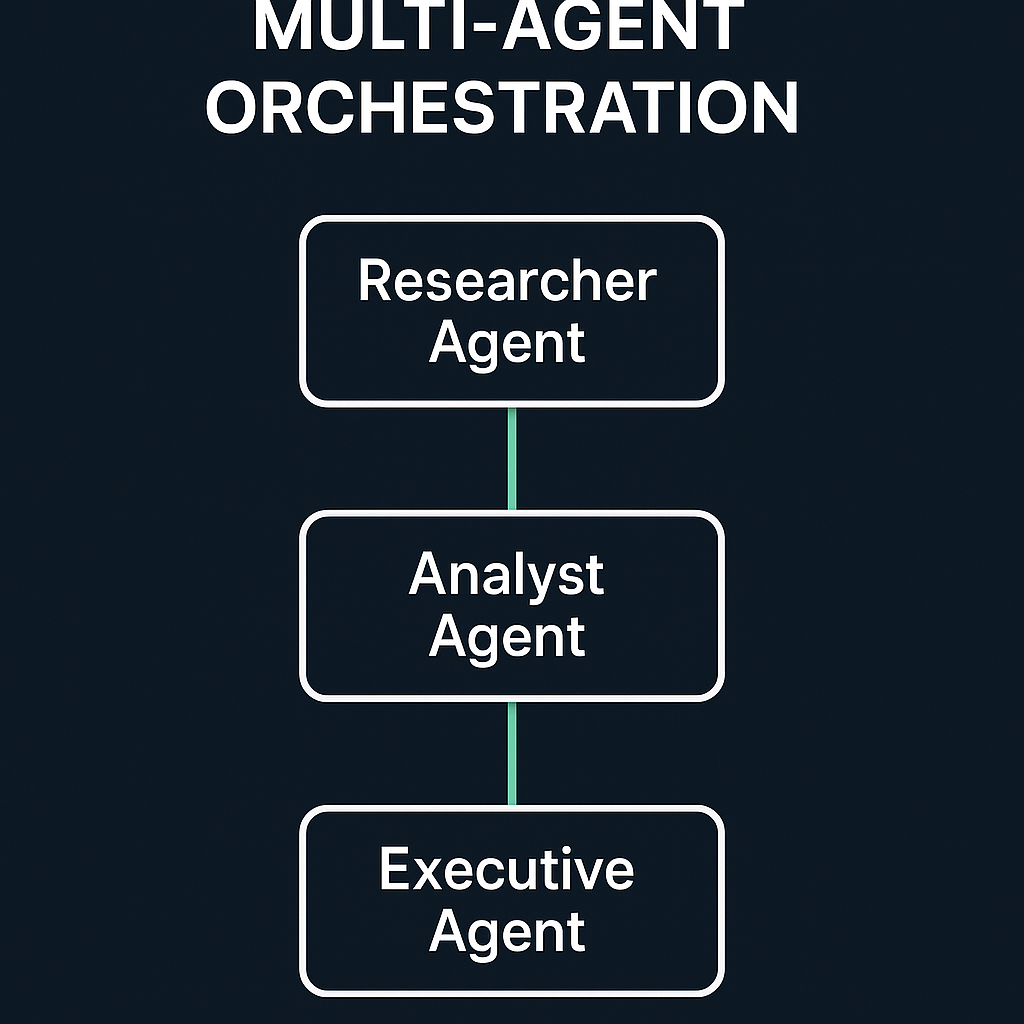
The Researcher Agent: Scrapes and verifies data.
The Analyst Agent: Identifies patterns and anomalies.
The Executive Agent: Summarizes findings and triggers a business action.
Microsoft Research notes that multi-agent orchestration enables more complex problem-solving by delegating specialized roles within a collaborative framework. This approach allows for a level of precision and oversight that is rarely possible with standard, one-size-fits-all tools.
Fine-Tuning as a Defensible Competitive Moat
A custom agent can use approved proprietary information without training a new model. Retrieval can supply relevant documents when a task needs current company knowledge; fine-tuning instead trains on examples to improve performance on a specific task or make responses more consistent. The right choice depends on what the agent must know and do, and on how each approach performs in tests using representative cases.
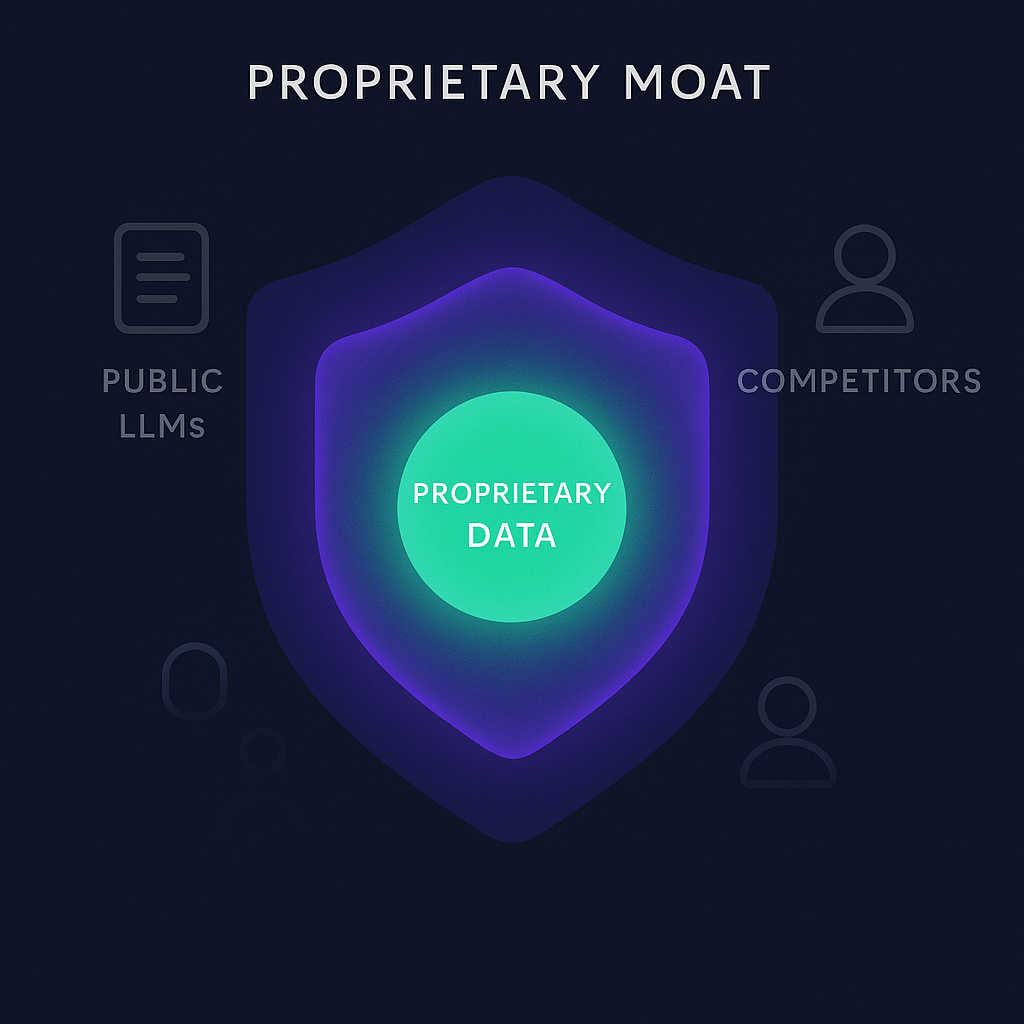
Proprietary workflows and knowledge can make an agent more useful to your team, but data access or fine-tuning alone does not guarantee accurate answers or a consistent brand voice. Evaluate outputs against your requirements, including edge cases, and keep the source material and tests up to date.
Merging Generative Flair with Agentic Planning
Modern custom systems use a hybrid architecture. They combine generative AI, which excels at creating content, with agentic frameworks designed for execution and logic. While a generic tool might write a great email, a hybrid custom agent using reasoning-based agentic workflows will perform significantly more complex tasks:
Analyze a customer's past purchase history to predict future needs.
Check real-time shipping logs for potential logistical delays.
Generate a personalized apology and a discount code tailored to the client's value.
Update the CRM automatically to reflect the interaction.
This goes beyond simple text generation; it is the execution of a business process. This power is evident in specialized use cases, such as CO₂ compliance, where agents autonomously monitor environmental data and adjust industrial strategies to remain within legal limits.
For more on applying agents to internal processes, including back-office tasks and the distinction from rigid automation, read how custom AI agents automate internal business workflows.
Navigating the Cold Start and Compliance Hurdles
A custom agent can start with a general-purpose model rather than learning everything from scratch. Begin with a narrow task and test it on real cases. If instructions and retrieval do not meet your accuracy or consistency needs, compare fine-tuning against that baseline; adding domain data alone does not guarantee better results.
For regulated work, compare providers and deployment options against your actual data requirements. Check whether prompts and outputs are used for training, where they are processed, how long they are retained, and which people or systems can access them. Business-product policies can differ from consumer-tool defaults; building a custom agent does not itself establish legal compliance. Design and verify the controls you need:
Pillar | Strategic Value |
|---|---|
Audit Trails | Configure logging of relevant tool calls, approvals and outputs, with access and retention rules appropriate to the use case |
Data Sovereignty | Choose hosting, provider settings and permitted data flows against your organization's data-handling requirements |
Embedded Governance | Enforce permissions, validation and human approval for sensitive actions; test these controls rather than assuming compliance |
Claiming Your Algorithmic Sovereignty
A custom agent can give you control over its integrations, permissions and observability, but it does not automatically make data private or give you ownership of the underlying model. Decide where sensitive information is processed, how long it is retained and who can approve consequential actions before deployment.
Gartner forecasts that by 2026, over 80% of enterprises will have deployed generative AI-enabled applications or used APIs in production environments. As you move forward, focus on creating specialized entities that don't just talk about work but actually perform it, turning AI from a conversational novelty into a fundamental pillar of your business operations.
Not every workflow needs a custom build. Before committing, use our build-or-buy guide for custom AI agents to compare vendor capabilities with your integration, data, compliance, cost, and operational requirements.
If you're evaluating how to build one, start with the core components of an AI agent for tools, memory, and the agentic loop. For production decisions about permissions, guardrails, and failure recovery, read the AI agent architecture guide.
Want support for Custom AI Agents?
See our custom AI agent offering and reach out on demand.
Custom AI Agent Development